Blog

  • How you can become a supporter of the #FETEBerlin!

    How you can become a supporter of the #FETEBerlin!

    There are a ton of ways and opportunities to get involved in the Fête de la Musique. The most obvious one is to organise a concert as a stage or to take part as a musician – or of course attending one of the huge number of free concerts as a guest. But that’s not where it stops. Because you can also become a supporter of #FETEBerlin.

    In this article, we’d like to give you some ideas on how you can go about that – and hopefully get you fired up to do so at the same time! And there are of course no limits to your imagination in ways that you could support the #FETEBerlin – and the possibilities go way beyond the ideas that we present here….

    Think big or forget it? Nope, we start small and feel our way forward!

    Offer your support as a private individual

    Your support can start small. Bilaterally and as a private individual. By simply being there and helping, and of course at the stage or artist of your choice. Uncomplicated and low-threshold offers are for example:

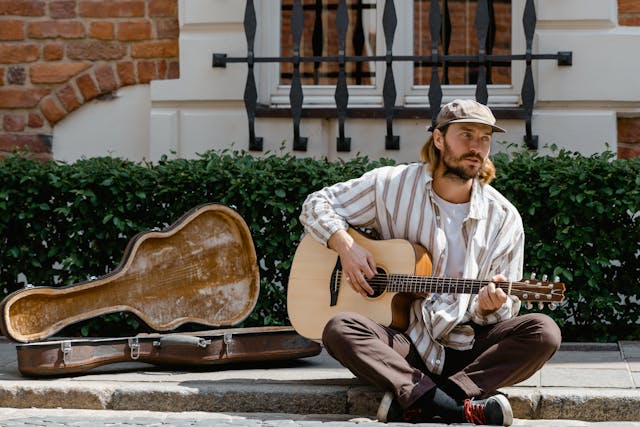
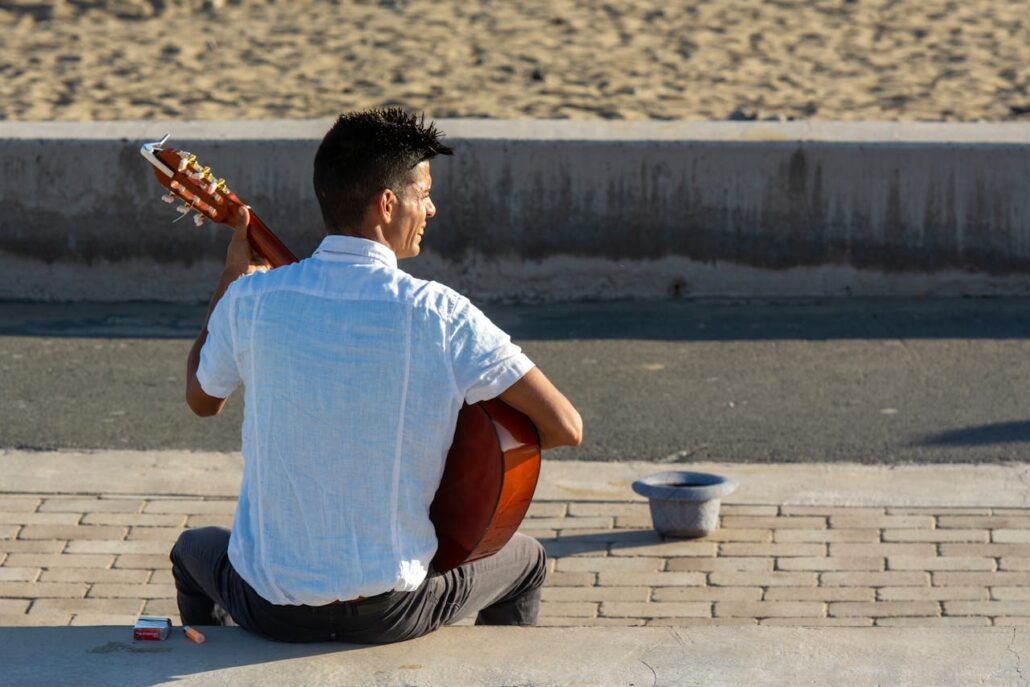
    • Throwing something into the hat of street musicians
    • Offering sound engineering for a stage
    • Enabling technical support or hire
    • Offer catering
    FETE Support guidance (Spruch)

    Arrange a presentation or small sponsorship as a shop or service provider

    If you run a local business or offer a local service, there’s bound to be some service that you could offer to a local stage – while advertising and gaining visibility for your work in the best way possible. There’s an overview of the stages in our matchmaking tool. Feel free to register there as a supporter and search for suitable partners. The rest, i.e. the quid pro quo and the type of support, is then up to you and the stage.

    Cooperations that go beyond local visibility

    Campaigns involving several stages can also be organised – initiated by you and put into place with our support (if so wished). For example, support for particularly sustainable, environmentally friendly or inclusive stages or acts is eminently possible. If you are interested but are still missing contact persons or concept ideas, please get in touch with us at hallo@fetedelamusique.de.

    Become a sponsor of the Fête de la Musique

    It may be a little late for this year, but we would like to sow the seeds of ideas here and give you space for ideas and initiatives.

    What was previously not possible has now become simply necessary, due to the shrinking financial scope everywhere. The Fête de la Musique is open to sponsorship. As the range of potential co-operations is immense on the one hand, and on the other hand consideration should be given to the plural and diverse interests and, above all, opinions of all participants, direct communication with the Fête de la Musique team is the best way forward. Please get in touch at hallo@fetedelamusique.de.

    On the subject of primary sponsorship of the Fête de la Musique Berlin

    If you happen to be or know a large company that is a good fit for the Fête de la Musique and would like to use the huge potentical reach for advertising messages (that don’t contradict the spirit of the Fête de la Musique): please get in touch! We look forward to knitting together some exciting marketing co-operations.

    And in all these things: Passing on the message, developing ideas and giving extra oomph to your own initiative is always a good thing!

    Title photo (c) Jim Kroft / second photo via Pexels
  • Greener Fête – what it’s all about

    Greener Fête – what it’s all about

    Berlin has the goal of becoming completely climate-neutral by 2050, keeping pace with other global western cities intent on doing the same. Achieving this is less down to technical innovations and more about social changes – and changes in the way we think. 

    And of course the Fête de la Musique is fully on board too! Since 2019 we’ve had the idea of ensuring that we have as green a Fête as possible and made this central to our planning.

    Through the “Greener Fête” project that was kicked off in 2019, the Fête de la Musique, along with Jacob Bilabel, founder of the Green Music Initiative, Dr.-Ing. Birte Jung as an expert in sustainable public space events, and the stage partners involved in the Fête are working on making sure that climate protection and enjoying music are in no way mutually exclusive.

    It’s not enough for the FETE organisational team to think green, but the stages should have this in mind too

    The Fête de la Musique is almost unique in its decentralised setup, with around 200- 300 locations all organising their own concerts and approaches. Which adds the challenge that it’s not enough for the FETE organisational team to think green, but the stages need to have this in mind too!

    “To leave the world better than you found it, sometimes you have to pick up other people’s trash.” — Bill Nye (“The Science Guy”), American TV presenter and author

    If you’re one of the many stages that we’re delighted to hear are putting on live music in this 2024 Fête de la Musique, here are some ideas that you can think about to help keep the Fête green!

    Prioritising Sustainability from the Get-Go

    When orchestrating an event of any scale, the initial planning stages are crucial. It is during this time that one can think of how one can incorporate eco-friendly ideas into the event’s blueprint. 

    “The greatest threat to our planet is the belief that someone else will save it.”— Robert Swan, British polar researcher and environmentalist

    Making sustainability a cornerstone of our event planning process from the outset allows us to seize opportunities that could otherwise be missed. This proactive approach not only reduces the negative impact of the event on the environment but also helps avoid unnecessary problems.

    Forming Eco-Friendly Partnerships

    The success of a green gig often has a lot to do with the degree of participation of all parties involved. Engaging vendors, caterers, and other partners early in your eco-friendly efforts can help ensure everyone is on the same page. 

    They can implement proactive measures to reduce or avoid waste even before it is generated or brought into your event space. Establishing collaborations with locally committed people and organisations who are focused on reducing waste and increasing sustainability can get the ball rolling.

    Factoring in Food Waste

    Food is an integral part of any event, and unfortunately, so is food waste. Try to make sure any packaging used is as green as possible (no styropor, as little plastic as possible), and use paper, cardboard or bamboo and a refund system. Food waste itself can be reduced as much as possible and what is there can be put in a special food waste container, that can be picked up or delivered to a climate-friendly food waste plant. Try for example entsorgung.de.

    And for left-over food think about partnering with organisations like:

    Sir Plus

    Too Good to Go

    Foodsharing

    Strategising Bin Placement

    While it may seem trivial, the placement of recycling bins can hugely impact their effective use. Optimal bin placement throughout your event can encourage guests and staff to use the bins properly. Understanding the flow of people moving through your event space can help determine the best places to position your bins. For example, ashtrays where people smoke; paper and plastic bins next to where people will be eating – or finishing their meals. And try to make sure that you have a deposit on your plastic glasses so that people return them.

    Providing Clear Signs

    When it comes to recycling, clarity is key. Clear, easy-to-understand graphics on your recycling bins can help people at the concert make the right choice quickly. It’s best practice to use images of the relevant products during your concert, as it helps guests identify what goes where. This approach can also overcome language barriers and help ensure quick decision-making, even amidst the excitement of the day.

    Publicising Your Sustainability Goals

    Transparency about your sustainability goals can help generate enthusiasm and encourage participation. You can communicate this information through various channels such as your website, social media platforms, posters, and event program. By letting everyone know about your eco-friendly initiatives, you can foster a climate of collective responsibility and action.

    And there are plenty more ways to make sure that your gig is as green as it can be! Watch this space over the lead-up to the big day for more tips and tricks on staying sustainable!

    Fotos (c) Titel: Nirgendwo / Straßenmusiker: Mart Productions via Pexels / Berliner Dom: Siegfried Poepperl via Pexels / Signs: Tim Mossholder via Pexels

  • How to take part in the Fête de la Musique: Misconceptions and Truths

    How to take part in the Fête de la Musique: Misconceptions and Truths

    The Fête de la Musique has been going on in Berlin for a number of years now, and if you’re close to it, it’s easy to get into the habit of assuming that everyone – meaning musicians and artistically active people who might want to take part in it – are equally clued in about the ins and outs of how (and why, and when) you can (and should) take part in what has become Berlin’s biggest open-air music event of the year. 

    Which is why we decided to present here, as simply and straightforwardly as possible…

    • just what the point of the Fête de la Musique is, 
    • what you need to do if you’d like to perform on the day, and 
    • how to find a stage / venue to perform at.

    And of course, WHY you should do that.

    But first: one short paragraph to go over just what the Fête de la Musique – in some places around the world called Make Music Day, Music Day or World Music Day – is, how it started, and what it’s all about.

    Photo by Charles Delos Reyes via pexels.com

    It was a sunny day (one assumes) in Paris when Jack Lang, the then-cultural secretary of that city looked out of his window and suddenly thought, “Mon Dieu!” (or something along those lines) when he heard the startling (as he thought at the time) fact that one in two young French people played an instrument of some kind or sang. But where were these people? 

    The music everywhere and the concert nowhere

    He turned for help to his recently appointed Director of Music and Dance at the French Ministry of Culture (quite a mouthful), one Maurice Fleuret. Monsieur Fleuret hit upon the concept of “the music everywhere and the concert nowhere”. Armed with this admirable sentence, M. Lang decided that every year on the 21st June – the summer equinox and with it the official beginning of summer – there should be music everywhere. That everyone who wished to and who had an instrument should come out onto the streets and play.

    And so it came to pass. Since that year, the Fête de la Musique has taken place each summer, with the idea that there would be music to enjoy for free, on the streets and on the stages, this one day in the year, every year. The idea quickly grew beyond Paris and indeed beyond France. To the point that as of 2021 the day of music was being celebrated on every continent and in hundreds of countries. 

    GEMA fees are paid by the Music Board

    But back to how (and why) to take part in Berlin’s version of the event. Let us start with clearing up some common misconceptions.

    Misconception No.1: The team commissioned by the Berlin Music Board to organise the Fête organises the venues / stages where you can play.

    The Truth: The stages / venues are independently set up and run (some are street stages, many are bars/restaurants/etc) by whoever wants to run or set up a stage. To be part of the Fête’s official program they are required to register by 31 of March for outdoor stages and 30th of April for indoor stages. The Fête team helps with questions and to coordinate things (as well as to promote them), but it’s the venues that decide on who will play on their stage and how it will be organised. And two of the biggest advantages for a venue / stage being included in the official program are:

    •  that there is a special dispensation for being noisy (within reason) for all official stages (up until 10pm, which is also when the Fête itself ends). 
    • And also: The GEMA fees are paid by the Music Board, so that the venues don’t have that cost, while the musicians can still fill in a GEMA sheet for each gig.
    Fete de la Musique for street musicians by jan-van-der-wolf
    Poto by Jan Van Der Wolf via Pexels.com

    It pays off (hugely) to be proactive

    Misconception No. 2: It’s difficult to find a stage / venue to play at.

    The Truth: Actually it’s surprisingly easy. The FêteBERLIN website (www.fetedelamusique.de) hosts a “Matchmaking Tool” – where stages on the one hand and musicians/bands on the other, can register and find each other. NB: If you’re a musician wishing to perform, please don’t just sign up on the Matchmaking Tool and wait. It pays off (hugely) to be proactive: Check out the various venues you’ll find there, choose the ones you’d like to play at (you can play at as many as you can fit into the day), and write to them, telling them you’d like to play on their stage.*

    *NB Venues have until the end of March to register, which means that as a musician you’ll only be able to find venues in the Matchmaking Tool AFTER the end of March!

    Misconception No. 3: The Fête takes place on a different day each year.

    The Truth: As mentioned above, in fact the Fête de la Musique takes place every year on the 21st June, which is the summer equinox and the official start of summer.

    Photo by Gaho Chen via pexels.com

    This one’s a biggie

    Misconception No. 4: (and this one’s a biggie) You are not allowed to make any money playing on this day.

    The Truth: While it’s become customary that on this day no one is charged for attending a concert and for this reason the musicians also contribute their time and energy without a cash reward, each musician and stage can make up their own rules. 

    And two more things to note:

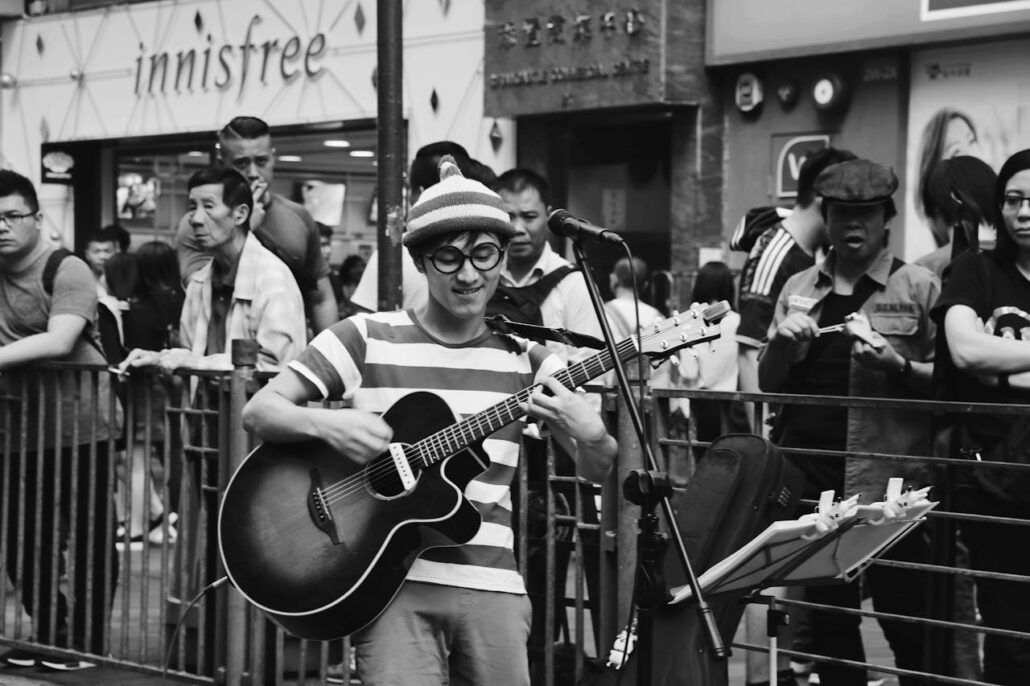
    1.  If you’re a street musician in Berlin, then you’re no doubt used to being moved on by the boys (and girls) in blue on a regular basis. But on the 21st of June, things will be different. On this day, from 3pm to 10pm, you’re officially allowed to play anywhere in public – and put your hat out too. No boys in blue, no cat and mouse, just pure busking bliss…
    2. As we get closer to the date, there will be official posters available to download on the www.fetedelamusique.de website, with blank spaces where you can fill in the name of the venue you’re playing and your artist name.

    No boys in blue, no cat and mouse, just pure busking bliss…

    Now we’ve got the Main Misconceptions and Things To Note out of the way, here’s how to find a venue to play at:

    1. Go to the www.fetedelamusique.de website.
    2. Find the button that says “Matchmaking Tool”.
    3. Hit that mother.
    4. Fill in your details on the form that appears.
    5. Write in as much information as you can, on what genre you play, what your technical requirements are (to give the venue an idea of whether they can successfully host you or not) and so on.
    6. Confirm your email address in your email program.
    7. Now – this is where the important bit starts: go into the Matchmaking Tool that you now have access to on a regular basis, go through the venues and see which one(s) you’d like to play at, at contact them, send them a friendly reminder, etc.

    Aaaand….that’s it.

    Yup, it’s that easy.

    And once you’re on the official program you can also tag all your music-related Insta reels with FETEBerlin and we’ll share you on our channel (and look out for the next blog article on how to get EVEN MORE social visibility boost with the FETEBerlin.

    See you there!

  • The #FETE is for everyone: Fête de la Musique cooperates with pinc music

    The #FETE is for everyone: Fête de la Musique cooperates with pinc music

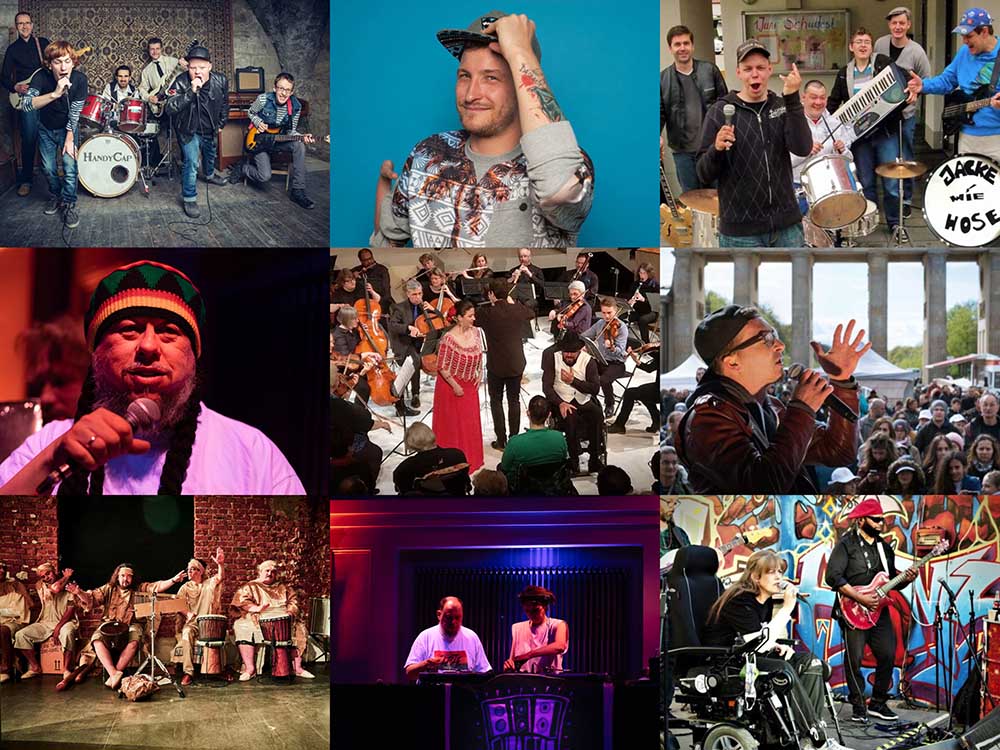
    Everyone’s welcome at the Fête de la Musique. But for some music fans the barriers might be higher than for others. We want to overcome these barriers, and overcome them together with you: we want to make our concerts more inclusive. That’s why we work with the experts: Handiclapped – Kultur Barrierefrei e.V. – is helping us and helping you to make our concerts barrier-free. Step by step.

    Logo Pinc Music, Fête de la Musique Berlin

    We’ve got a guide to improve accessibility at concerts on our website. And if you want to book inclusive bands, you can do that too, via the Pink Music platform.

    Pinc Music is the platform for inclusive music. On the Pinc website, organizers and other interested parties can find inclusive bands and solo musicians with disabilities.

    For every event the right act:

    • From Hamburg to Munich and from Greifswald to Saarbrücken
    • From solo artists to orchestras
    • From fun drummers to full professionals
    • From punk to classical music
    Feier auf Konzert von pinc Music

    The acts are presented in text, with picture and usually a video. They can be searched by various criteria such as state and genre. The contact details of the bands are displayed too, so that interested parties can contact them directly.

    Inclusive acts enrich every event. The common experience of their live music connects and remains in memory. The aim of the platform is to give visibility to the musicians and ultimately to ensure that as many inclusive concerts as possible take place.

    Pinc Music is run by Handiclapped – Kultur Barrierefrei e.V.. The non-profit association has already organized more than 350 inclusive concerts. The Federal Association for Music Technology MusicTech Germany is also helping with Pinc Music. The Initiative Musik supports the project as part of an infrastructure grant.

    Photos (c) Martin Sommer for Handiclapped

    More information:

    Download: Guide and link list for accessibility at live cultural events (PDF)
    Web: https://pincmusic.net
    Facebook: https://www.facebook.com/pincmusic
    Instagram: https://www.instagram.com/pincmusic/
    Youtube: https://youtube.com/@pincmusic_net

  • #FETE2023 Make music: For each other. Here. And now!

    #FETE2023 Make music: For each other. Here. And now!

    Fête de la Musique Berlin Logo


    The beginning of summer belongs to the Fête de la Musique. After a brilliant return to the stages of the city and with many tens of thousands of spectators last year, we are already looking forward to the beginning of summer on June 21, 2023 and to your contribution to the Fête de la Musique Berlin. Seven months before the longest day of the year, we are now starting the application phase for the music venues. In January we will continue with the call to the musicians of the city. We are looking forward to your creativity, your ideas and your remarkable and voluntary efforts to ensure that so many people in our city can enjoy music on June 21.

    Make music – Faîtes de la Musique! This is the call that has been heard around June 21st for 40 years. In Paris. In Berlin. All over the world. Music has the power to bring us closer together, to create community, to remove what divides us, at least temporarily, and to fill a place, an entire city, with positive energy.

    The Fête de la Musique has this power. It knows neither stylistic nor social barriers. Everyone is allowed to participate – as creators on or behind the stage, as listeners and dancers. The Fête de la Musique is a celebration of all for all. And it is a celebration of sharing and inviting gestures.

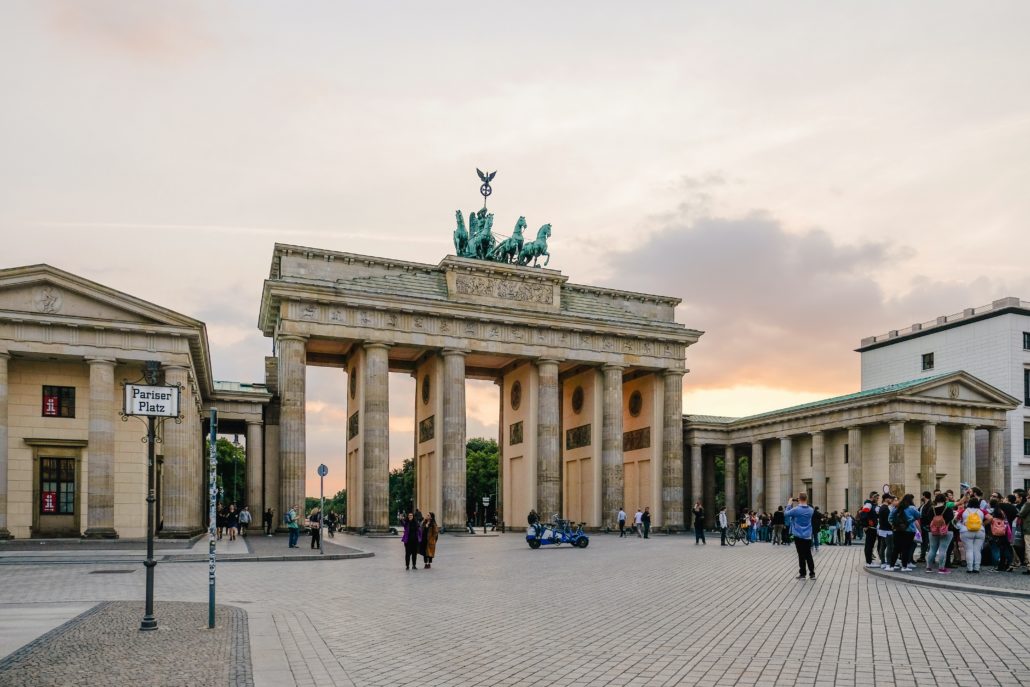
    Fête de la Musique Brandenburger Tor Berlin

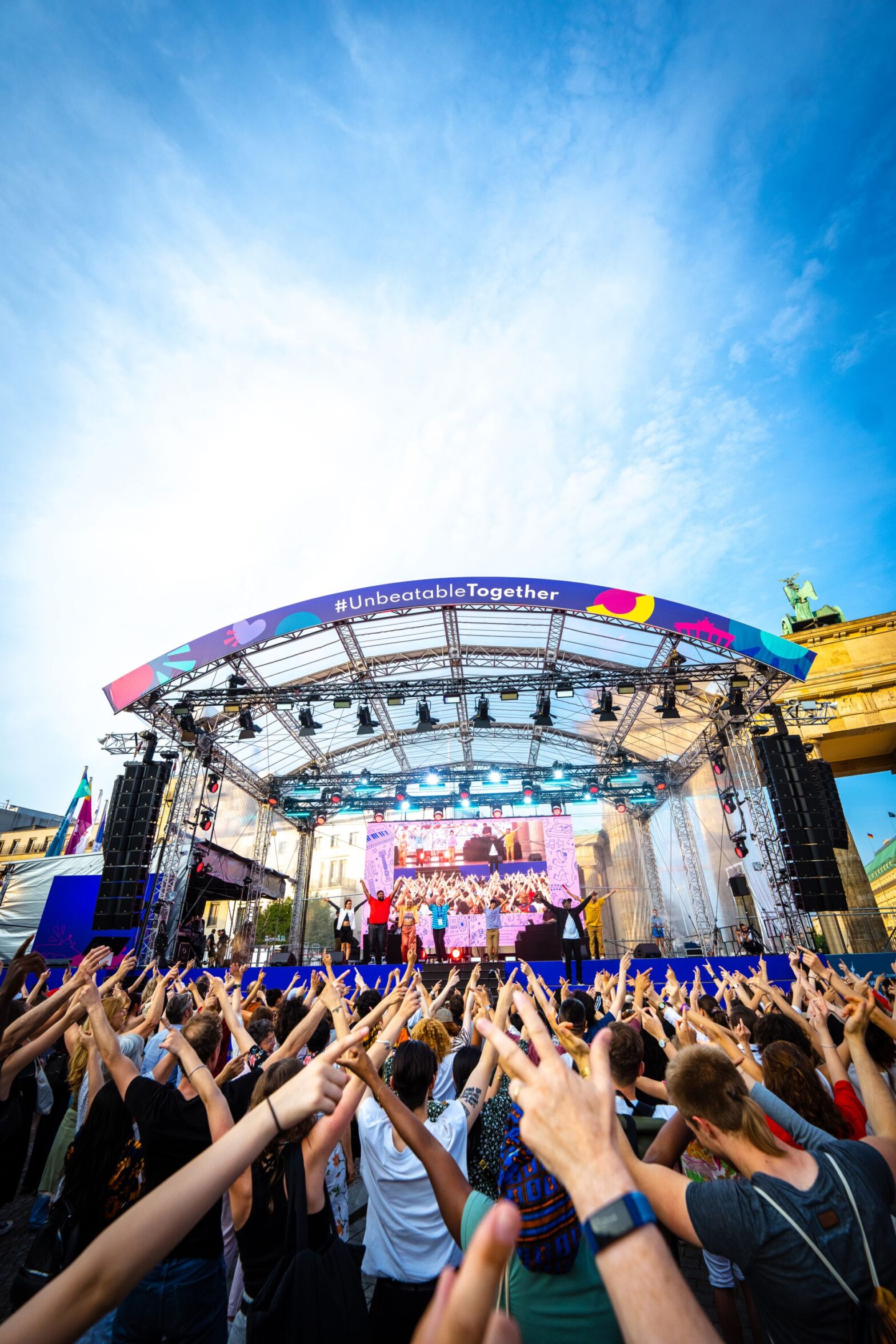
    This is the core of the Fête de la Musique and this is the core we would like to emphasize, strengthen and promote on June 21st, 2023 in Berlin: be there for each other, make music together and for each other. On which other day of the year can people enjoy hundreds of concerts in all districts of the city without paying admission? On which other day do so many institutions, established houses and renowned ensembles open up to new audiences? On which other day do completely unknown musicians have the chance to play on big stages in front of unexpectedly large audiences?

    Also save the date, spread the word und FAITES DE LA MUSIQUE!

    Fotos (c) Jim Kroft

  • Max Schmeling Halle: groundbreaking Green Globe-certified venue does everything right

    Max Schmeling Halle: groundbreaking Green Globe-certified venue does everything right

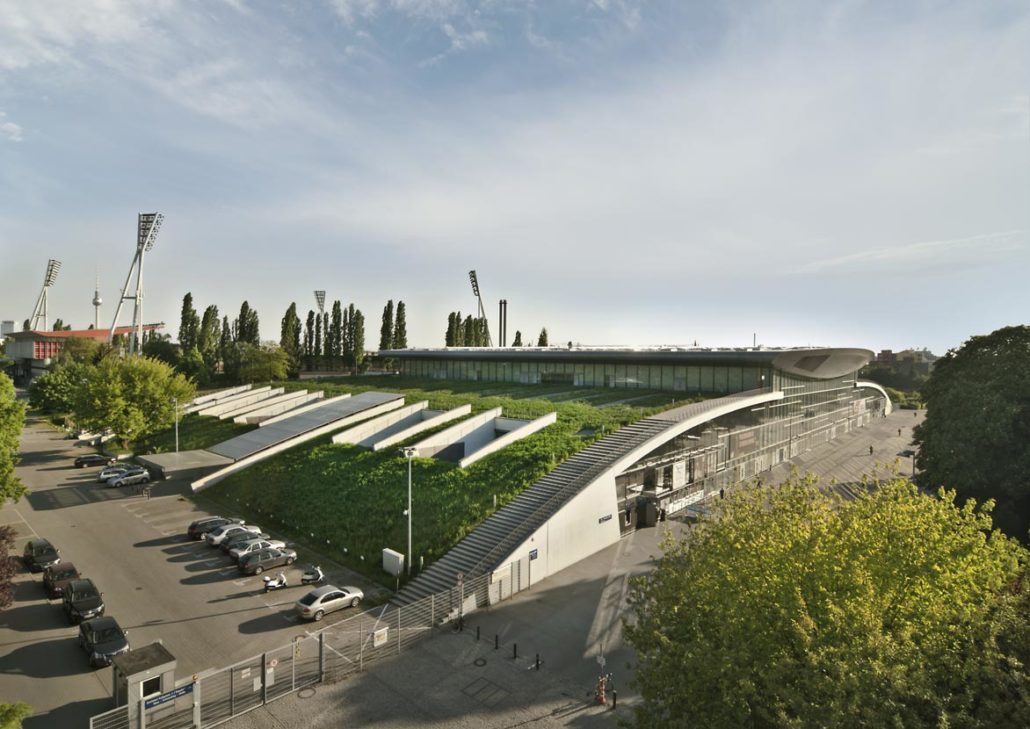
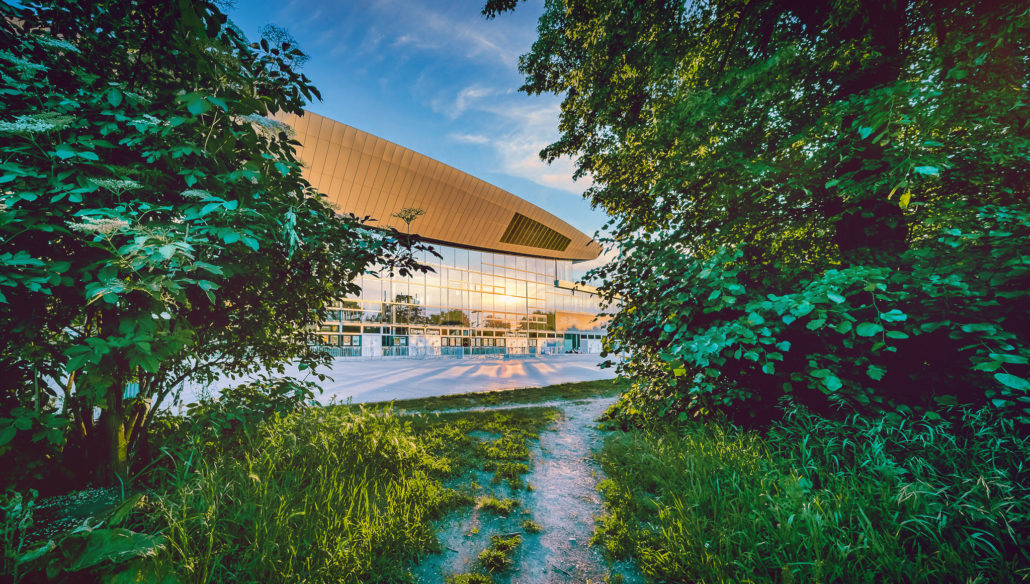
    The Max Schmeling concert and events venue situated on the border between Wedding and Prenzlauerberg has long been recognised as a leading light in Berlin’s push towards more sustainability in live events.

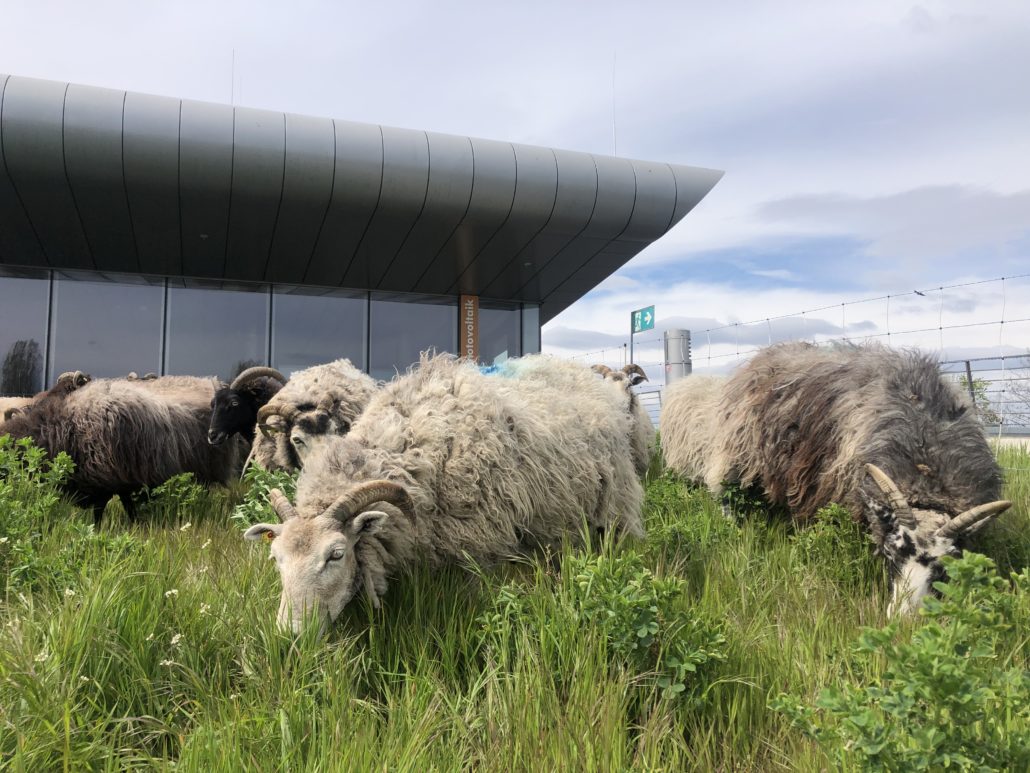
    The roof surfaces of the large event hall with space for 12,000 people are largely planted with grass, helping it to blend in with its park surroundings, as well as provide natural insulation. The roof forms a walkable green bridge that connects Wedding (formerly West Berlin) and Prenzlauerberg (formerly East Berlin).

    And how do they keep the grass short?

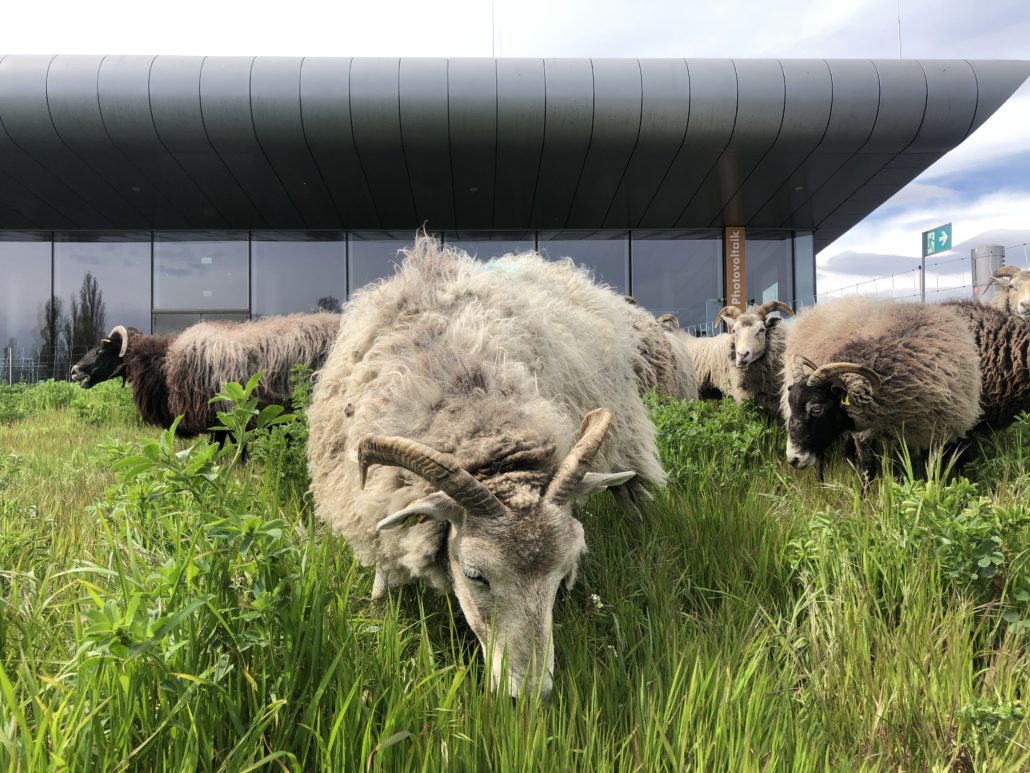
    Easy. With a bunch of Swedish sheep, who casually roam the grassed roof in the summer and munch away. The sheep are of the Gutschafe variety, officially part of Sweden’s cultural heritage, and I’m sure they enjoy wandering around on the roof of the hall while music acts like Von Wegen Lisbeth, Thom Yorke and Pink belt away below them.

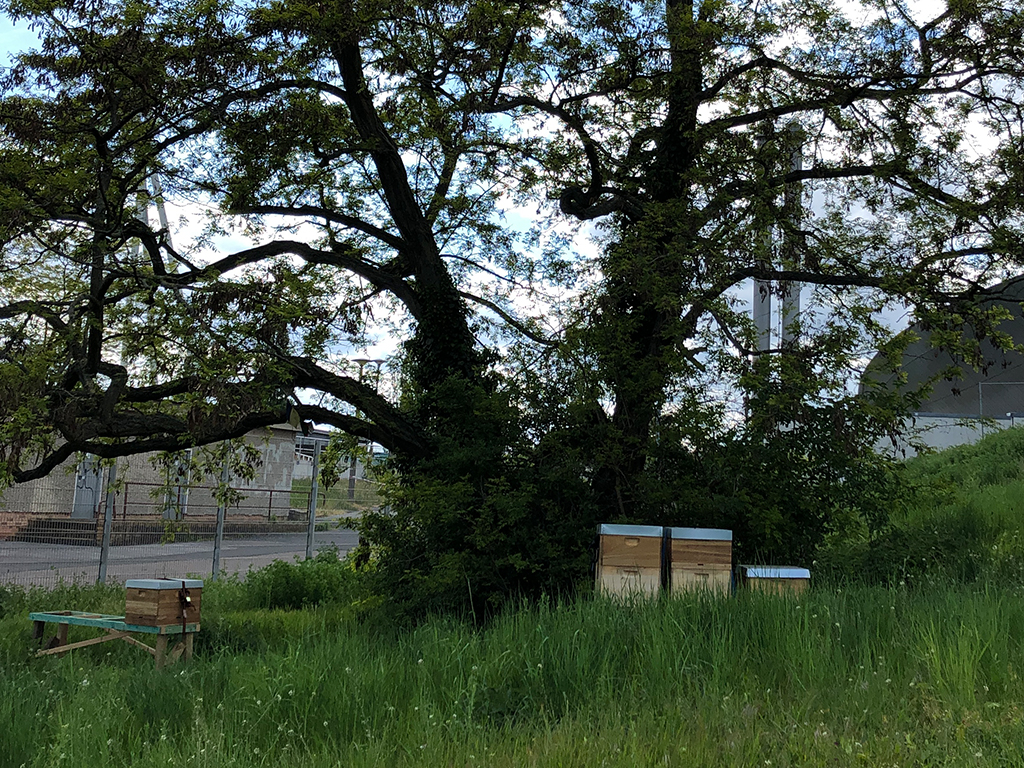
    The sheep are not the only non-human inhabitants of the roof: there also a few bee colonies, looked after by local beekeepers Thorsten Probst and Wolfgang Wagner. The hall not only gets to help look after the bees, they also get some tasty locally-sourced honey too!

    There are also 1,064 solar modules on the roof, that pump their 100% green electricity into the Berlin power grid.

    As to the CO2 emissions caused by the huge number of fans turning up for the concerts at the Max Schmeling Hall, there are numerous CO2 emission-free mobility options on hand, including local bike and scooter rentals as well as Berlin’s public transport system, itself invested in Berlin’s push towards becoming climate neutral. And the venue has made a point of putting a very large number of bike stands outside its doors to help encourage the two-wheeled mode of transport.

    Photo Credit Andreas Budtke

    The Max Schmeling Hall is a member of Take a Stand (“encouraging social cohesion in our society, promoting awareness and tolerance for all cultures, genders, races, religions, sexual orientations, colours and origins”), of the  Viva con Agua de Sankt Pauli e.V.. (championing access to clean drinking water, sanitation and hygiene), and is gold-certified by Green Globe (the world’s premier certification and performance improvement actor, “assisting organizations to improve their economic, social and environmental sustainability for its efforts”) – and was in fact the first multi-functional event venue in Germany to be cerftified by Green Globe.

    The Fête de la Musique Berlin team have long been fans of the Max Schmeling Hall’s devotion to helping Berlin’s event industry become greener, and hopefully one day climate-neutral…and we look forward to lots more great concerts and live events beneath the munching sheep and buzzing bees!

  • The best waste is zero waste: moving towards null

    The best waste is zero waste: moving towards null

    To meet the challenges of climate change, we need to transform large parts of our lives towards a circular economy.

    The Greener Fête de la Musique is guided by the so-called 7xR model of the European GEX project: Reduce – Repair – Reuse – Refurbish – Recycle – Recover – Rethink.

    At its core is the question of how we can decouple our growth from resource consumption in the future. In these new processes, waste should ideally be avoided completely (zero waste) and the resources should be able to be reprocessed as valuable materials in new product cycles. At the Fête de la Musique, waste is generated mostly at the catering stands, or by the drinks and disposable packaging of food and drinks brought along by the visitors.

    The best waste is the waste that is not created in the first place

    But your flyers, giveaways and decoration materials can also produce waste if you don’t take practical measures to reduce the amount from the outset. Especially at events in public areas and on green or open spaces, this can lead to major challenges.

    Therefore, first and foremost, consider what waste prevention measures you can implement. The best waste is the waste that is not created in the first place. Maybe instead of a printed flyer or poster, a digital offer could do a better job of promoting your event?

    Compostable cups are only really environmentally friendly if they are clean when collected

    It’s best to plan to use reusable materials in your decorations, ones that you can also use at your next event. For the catering stands, reusable dishes and cups are of course the better solution. Ask your stand partners how they can help you to minimise waste at your event.

    There are now many beverage manufacturers and breweries that have developed innovative solutions in this area and would love to present them at sustainable events. Unfortunately, compostable cups are only really environmentally friendly if they are clean when collected and then recycled in a composting plant under special conditions.

    And let’s face it, this almost never happens.

    Which means that reusable solutions are almost always the more environmentally friendly option. In the meantime, some non-profit organisations such as DorfwerkStadt e.V. offer reusable dishes and dishwashers for inexpensive rental. And if you still have waste at your event, separate it, if possible, so that the waste management professionals can make the best of it.

    Photo by Singkham, via Pexels, used by permission

  • Mobility: Taking the first step to a greener event

    Mobility: Taking the first step to a greener event

    Welcome to the third part of our series of articles on how we can try to make live events more sustainable and less harmful to the environment. Last week we talked about energy and electricity; this week we’re talking about mobility.

    The arrival and departure of visitors and musicians account for about 80% of the emissions of an event.

    Even though this Fête de la Musique is mainly taking place in Berlin, it produces large CO2 emissions. A Greener Fête de la Musique also intends to make a significant reduction possible here through a few simple measures.

    Of course you can’t tell your visitors how to get to you, but by choosing the location of your event you can make it much easier for them to get there by public transport or bicycle.

    Since parking spaces are scarce in Berlin anyway, you are already saving the environment and the nerves of both visitors and residents. I’m sure everyone will thank you.

    The arrival and departure of visitors and musicians account for about 80% of the emissions of an event.

    Of course, an innovative bicycle concept also needs enough secure parking spaces and maybe even a special feature or two as a goodie for those who travel by a more environmentally friendly means of transport. Hamburg’s bicycle wardrobe is a wonderful example of this.

    Cooperation with the numerous Berlin bicycle initiatives offers one great way to positively impact our footprint. When it comes to material logistics for the stage, instruments and catering, there are also various providers who can supply you with electric vehicles or cargo bikes that work in an environmentally friendly way.

    If you are planning a larger event, the offer of a one-day combined ticket with the BVG can motivate your visitors to come to your Greener Fête de la Musique event in a relaxed manner by bus, tram or train.

    We hope you enjoyed this article about environmentally friendly and sustainable mobility for events.

    Check back next week (or sign up for our newsletter so you don’t miss out!) – for more tips on how to make your stage at Fete de la Musique 2021 more environmentally friendly.

    And of course, our tips for reducing the ecological impact of live events apply to all live events you host – and we hope there will be many more of them in the future!

    Main photo by Christina Spinnen via Unsplash

  • The Yaam is a great example of sustainable event strategy

    The Yaam is a great example of sustainable event strategy

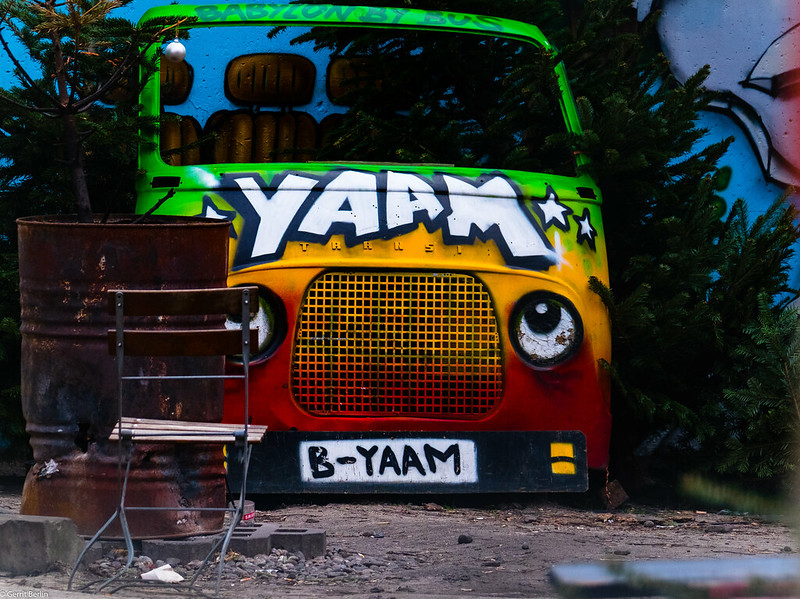
    Yaam has been an integral part of Berlin’s club scene for 25 years. After stints at various addresses, the “Young African Art Market” is now based at the Schillingbrücke at Ostbahnhof in a huge concrete hall.

    Due to the great ceiling height and the consequently huge air volumes, the non-profit association decided on a gas-fired dark radiator system, which heats the rooms by means of infrared radiation.  

    Compared to conventional heating systems, up to 70% of energy can be saved due to brief operating times and high energy yield. The heating system used was awarded the German Sustainability Prize in 2012 as Germany’s most sustainable product.

    the non-profit association decided on a gas-fired dark radiator system, which heats the rooms by means of infrared radiation.

    The YAAM uses green gas and green electricity and does its best to limit water consumption and reduce energy output overall. LED technology & motion detectors are now a tried and tested, well-functioning system.

    Martin Gräff (technical director, board of Kult e.V.) says: “I have been convinced from the very beginning that regenerative energies are the future in all areas. Why pay money for energy? Why burden the environment unnecessarily? Clearly, a radical rethink must take place at all levels of society and the senseless clinging to outdated and environmentally damaging and environmentally harmful processes as quickly as possible.”

    The heating system used was awarded the German Sustainability Prize in 2012 as Germany’s most sustainable product

    Matthias Krümmel from the Berliner Energiecheck from BUND adds: “With our Berlin Energycheck project, we provide advice on low-investment measures that make sense, especially at home, save money and reduce the burden on the climate. However, our nightlife, i.e. enjoying cold drinks, good music and atmospheric lighting, naturally also comes with a considerable ecological footprint – no culture without energy and resource consumption…Through low-investment measures, the YAAM can adhoc save 10,000 kWh of electricity.”

    This is a great example of the cultural and event industry coming up with innovative ways to cut way down on their energy output and helping to make the event industry greener!

    Main photo by GerritBurow via Flickr.com under a Creative Commons 2.0 licence

  • A vision of a greener Fête: a chance for a new beginning

    A vision of a greener Fête: a chance for a new beginning

    When the world locked down, some people spoke of a chance for a new beginning.

    We were all forced to stop, take a breath (a long one) and reconsider the world, and how we – individually and as a society – make our way in and  through it.

    Now, a year later, as the prospect of things opening up again rears its head; as we dare to hope that soon this will all be behind us; it seems that for many people, institutions and industries, that brief idea of embracing the possibility of starting afresh – of restarting better – has slipped away.

    Still there are many others of us who welcome this chance of facing problems – problems that were even before the pandemic becoming harder and harder to ignore – head on.

    While the rush for a Covid vaccine, and other aspects of dealing with a worldwide pandemic, has pushed climate change to the side, now it’s the ideal time for us to “build back better”.

    The Fete team got together with a few other interested parties and hammered out their very own Green New Deal, with a list of strategic goals laid out and committed to

    When talking about climate change and pointing fingers at the industries that are the easiest scapegoats – cars, the increase of SUVs, oil generally, air transport and the rest – it’s too easy for the live event industry, and the live music industry, to pretend that we don’t also have a part to play.

    “tons of CO2 emitted by the entire UK music industry per year, live performance venues and festivals alone cause at least 400,000 tons of annual CO2 emissions, not to mention the amount of energy consumed. 175,000 of the 400,000 tons of annual CO2 emissions are derived from audience transportation to the shows.” – http://www.thembj.org/2010/11/co2-emissions-in-the-music-industry/

    And of course the FETEBerlin team, in preparing for the Fete 2021, knew that this was a great time to take its own strides in that direction.

    • Watch this space for our upcoming series of articles about how to put on events with a focus on sustainability and environmental protection, with subjects including energy and electricity, mobility, waste and resources, water and santiation and more.

    Hence the Green New Deal: Under the banner of “A Greener Fete de la Musique”, the Fete team got together with a few other interested parties and hammered out their very own Green New Deal, with a list of strategic goals laid out and committed to.

    In fact as early as 2019, the project “Greener Fete” has been going on, together with Jacob Bilabel, the founder of the Green Music Initative, Dr.-Ing. Birte Jung in her position as expert for sustainable events in the public space, and the stage organisers that make the Fete happen each year. And so the FDLM has committed to being a pioneer in the implementation of local, national and international climate targets.

    Some of the points that the signatories* have agreed on include:

    • Making the Fete climate-neutral by 2030
    • A reduction in energy usage to the tune of 20-25% over the next 5 years
    • Doubling the resource efficiency of the FDLM in the next 5 years
    • Communicating the topics of sustainability, climate and environment protection within the context of the FDLM
    • Training up a Greener FDLM ambassador
    • And more…

    The FDLM has committed to being a pioneer in the implementation of local, national and international climate targets

    Furthermore, already in 2021 we are aiming to implement a range of improvements: from reducing our own water and electricity use, to promoting alternative / emission-free logistical transport for the Fete; from working to drastically increase the use of reusable food and drink containers to increasing awareness and understanding of running events with an eye on sustainability in our wonderful community of independent stage organisers…we’re excited to be able to make a contribution.

    *Signatories to these commitments include:

    Dr. Klaus Lederer (Senatskanzlei)

    Katja Lucker (Musicboard Berlin)

    Dr. Birte Jung

    Jacob Bilabel (Green Music Initative)

    Björn Döring (FDLM Berlin)

    Watch this space for our upcoming series of articles about how to put on events with a focus on sustainability and environmental protection, with subjects including energy and electricity, mobility, waste and resources, water and santiation and more.

    Main photo by Pixabay via Pexels